
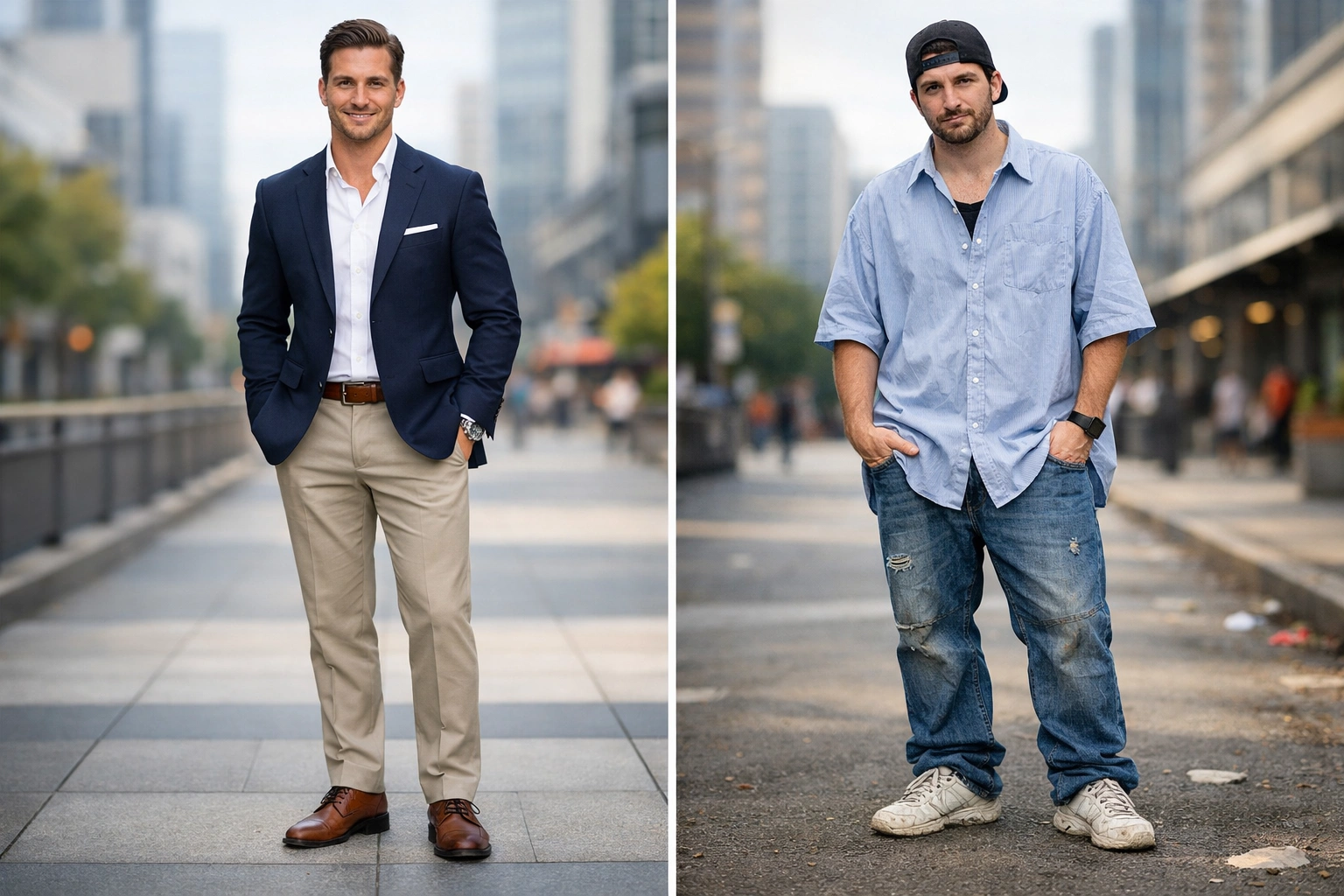
We have all been there — you put together an outfit that feels perfectly fine, step out the door, and something just does not look quite right. The frustrating part? It is rarely about how much money you spent. In reality, the most damaging fashion mistakes that make you look cheap have nothing to do with your budget and everything to do with fit, care, and intentionality.
Whether you are building a capsule wardrobe from scratch or refreshing a closet full of clothes, understanding the common fashion mistakes people make is the single most powerful thing you can do to elevate your personal style. This guide walks you through every major pitfall — and more importantly, exactly how to fix each one.

1. Wearing Clothes That Do Not Fit Properly
Of all the fashion mistakes you can make, poor fit is the number one culprit. A designer piece in the wrong size will always look cheaper than a high-street find that fits perfectly. Clothes that are too baggy create a shapeless, sloppy silhouette. Clothes that are too tight pull at the seams, create unwanted lines, and look uncomfortable.
What to watch for:
- Shirt shoulders sit off the natural shoulder line
- Trouser hems dragging on the floor or bunching at the ankle
- Jacket sleeves cover the hand completely
- Dress or skirt fabric pulling across the hips
- Shirt fabric straining across the chest or back
The fix is simpler than most people think: find a local tailor. Hemming trousers, taking in a shirt at the waist, or shortening a jacket sleeve costs very little and transforms an ordinary outfit into something that looks polished and intentional. Investing in a tailor is one of the smartest style decisions you will ever make.
2. Ignoring Fabric Quality and Texture
Not all fabrics are created equal, and this is something your eye picks up immediately — even before your brain registers it consciously. Cheap synthetic fabrics, particularly shiny polyester, are one of the most recognisable fashion mistakes that signal low quality. They cling in unflattering ways, do not breathe well, and pill rapidly after washing.
Natural fabrics like cotton, linen, wool, and silk drape beautifully and age gracefully. You do not need to spend a fortune — many high-street brands offer natural fabric blends at accessible price points. When shopping, rub the fabric between your fingers. If it feels thin, scratchy, or overly plastic-like, it is likely to look cheap on the body.
Pro tip:
Read the fabric composition label before purchasing. Aim for at least 70% natural fibre content in your core wardrobe pieces — shirts, trousers, blazers, and dresses. Reserve synthetics for activewear and occasion-specific pieces where performance matters more than drape.
3. Wearing Pilled, Faded, or Damaged Clothing
This is one of the fashion mistakes that sneaks up on people gradually. A garment that once looked great starts to show wear — the colour fades after repeated washing, small fabric pills appear on the surface, a seam begins to fray, or a button goes missing and never gets replaced. Wearing any of these items immediately undermines even the most stylish outfit.
Simple maintenance habits to adopt:
- Use a fabric shaver (lint defuzzer) to remove pilling every few weeks
- Wash dark colours inside out in cold water to preserve vibrancy
- Keep a small sewing kit for immediate button replacements
- Steam garments rather than over-ironing to preserve fabric structure
- Retire items that are beyond repair — a smaller, well-maintained wardrobe always looks better
4. Overdoing Logos and Branding
It may feel counterintuitive, but one of the most common fashion mistakes among people trying to look wealthy is wearing head-to-toe visible logos. Ironically, truly expensive fashion tends to be quiet and understated. When every item you wear is covered in a brand name or monogram, it reads as a desire to project an image rather than actual confidence in your style.
This does not mean you need to avoid all branded items. A single statement logo piece — a cap, a bag, a belt — can work well as an accent. The problem arises when multiple logoed items are worn together, creating a cluttered, try-hard aesthetic. The golden rule: let one piece make the statement, and keep everything else clean.
5. Neglecting Your Shoes
Shoes are the first thing many people notice, and worn-down, scuffed, or inappropriately styled footwear is one of the quickest fashion mistakes you can make. You could be wearing the most thoughtful outfit in the world, but if your shoes are dirty, have worn-down heels, or look out of place with the rest of your look, the entire ensemble falls apart.
How to get this right:
- Own fewer shoes and invest more in each pair
- Clean leather shoes after every wear with a soft cloth
- Condition leather regularly to prevent cracking
- Replace worn heel tips before they grind down to the metal
- Match shoe formality to outfit formality — never wear formal shoes with casual clothes or vice versa, unless intentionally styling a contrast
Read More Article
Best Affordable Clothing Brands in India
How to Dress Stylish on a Low Budget
Budget Outfits India -10 Outfits Under ₹2000 That Look Expensive
6. Wearing Too Many Colours at Once
Colour clashing is a fashion mistake that can immediately make an outfit look chaotic and low-effort. This does not mean you should only wear neutral tones — bold colour can be incredibly stylish when worn with intention. The issue arises when too many competing colours fight for attention without any visual cohesion.
A simple framework to follow: build your outfit around two to three colours maximum. Choose one dominant colour (usually the largest piece — trousers or a dress), one secondary colour, and optionally one accent through accessories or shoes. This creates a polished, intentional look regardless of whether you are in neutrals or vivid hues.
7. Forgetting About Grooming and Personal Care
Fashion mistakes extend beyond the clothes themselves. Grooming is the foundation upon which your wardrobe sits, and neglecting it undermines everything else. Uncut hair, unkempt nails, wrinkled clothes, and strong or absent fragrance all communicate carelessness — even when the outfit itself is well put together.
A well-groomed person in modest clothing always appears more put-together than a poorly groomed person in expensive pieces. Take the time to iron or steam garments before wearing, keep your hair clean and styled, maintain your nails, and find a subtle signature scent. These details cost very little but make an enormous difference to the overall impression you create.
8. Misusing Fast Fashion Trends
Chasing every micro-trend that cycles through social media is one of the fashion mistakes that drains both your wallet and your personal style. Fast fashion pieces are often made from lower-quality materials, designed to look good in photos rather than in real life, and are out of style within weeks of purchase. Wearing multiple trend-driven pieces simultaneously almost always creates an incoherent, throwaway aesthetic.
The solution is not to avoid trends altogether but to be selective. Identify trends that actually align with your natural style and body type, rather than adopting everything you see online. Invest in timeless core pieces — a well-cut blazer, quality denim, a white Oxford shirt, a classic coat — and use trend-driven items as occasional accents rather than the foundation of your wardrobe.
9. Wearing the Wrong Undergarments
This is one of the most overlooked fashion mistakes, yet it has an immediate and visible impact. Visible bra straps in the wrong context, underwear lines showing through fitted trousers or dresses, white undergarments beneath sheer or light-coloured fabrics, and stretched or misshapen underwear all create a noticeably unpolished look.
Invest in nude-toned seamless undergarments that work across a range of outfit colours. Replace worn, stretched, or discoloured pieces regularly. These are the invisible workhorses of a great outfit, and getting them right is a non-negotiable part of dressing well.
10. Over-Accessorising or Under-Accessorising
Accessories are powerful style tools, but they are also a common source of fashion mistakes. Piling on too many accessories — multiple necklaces, stacked bracelets, large earrings, a bold belt, and a statement bag all at once — creates visual noise that overwhelms the outfit. On the other hand, completely neglecting accessories can make even a well-tailored outfit feel unfinished and flat.
The standard styling principle is to choose one hero accessory per outfit — a beautiful watch, a statement necklace, an interesting bag — and keep everything else understated. This creates a focal point without clutter. Edit your accessories before leaving the house: if you are wearing bold earrings, skip the necklace. If the bag is the statement, keep jewellery minimal.
11. Dressing for the Wrong Occasion
Dressing out of context is a fashion mistake that communicates a lack of social awareness. Showing up to a formal dinner in casual streetwear or wearing office attire to a relaxed weekend brunch creates a disconnect that makes the outfit look wrong, regardless of its quality. Context is everything in fashion.
When in doubt, always aim one notch above what you think is required. It is far easier — and more stylish — to dress slightly smarter than the occasion demands than to underdress. Keep a mental checklist of venue, time of day, activity, and the people you will be around when choosing an outfit.
12. Buying Cheap Versions of Statement Pieces
There is a crucial difference between buying affordable basics and buying cheap versions of statement or investment pieces. Fashion mistakes often happen when people purchase a very low-cost version of a recognisably high-quality item — a flimsy dupe of a structured handbag, an extremely cheap suit, a synthetic version of a classic leather boot. These items usually look noticeably off: the proportions are slightly wrong, the materials lack depth, and they deteriorate quickly.
A smarter approach is to save and wait. Buy fewer statement pieces but invest properly in them. A single well-made leather bag will outlast and outperform ten cheap alternatives, and it will look better on day one thousand than the cheap version did on day one.
Quick Reference: Fashion Mistakes and Their Fixes
| Fashion Mistake | Quick Fix |
| Poor clothing fit | Visit a tailor for alterations on key pieces |
| Cheap synthetic fabrics | Choose natural fibres for core wardrobe items |
| Worn-out, pilled garments | Use a fabric shaver; retire damaged items |
| Excessive logos | One branded piece per outfit maximum |
| Scuffed, worn shoes | Clean and condition footwear regularly |
| Too many colours | Limit to two to three colours per outfit |
| Poor grooming | Steam clothes; maintain hair, nails, and scent |
| Chasing every trend | Build timeless basics; accent with select trends |
| Wrong undergarments | Invest in seamless, nude-toned underwear |
| Over-accessorising | Choose one hero accessory per outfit |
| Wrong dress code | Research context; dress one level up if unsure |
| Cheap statement pieces | Save and invest in fewer, better pieces |
Bonus Tips: Small Details That Make a Big Difference
Beyond the major fashion mistakes covered above, there are a handful of smaller details that stylish people instinctively manage — and that most people overlook completely.
- Remove the tacking stitch from new blazers and skirts — the X-shaped stitch at the back vent and pockets is meant to be cut before wearing
- Untuck the small square of fabric sewn inside jacket breast pockets — it is a decorative pocket square, not internal lining
- Avoid wearing socks with sandals unless it is an intentional, styled fashion choice
- Keep belt colour consistent with shoe colour for a pulled-together look
- Ensure your belt actually fits — a belt with stretched-out holes or that barely reaches the buckle looks untidy
- Store knitwear folded, never hung — hangers distort the shoulder shape over time
Conclusion: Avoiding Fashion Mistakes Is a Learnable Skill
The most important thing to remember is that looking stylish and polished is not about how much you spend — it is about how intentionally you dress. The fashion mistakes covered in this guide are all entirely fixable, and none of them requires a new wardrobe or a large budget. What they do require is a shift in mindset: from buying more to choosing better, from ignoring maintenance to making it a habit, and from dressing out of convenience to dressing with purpose.
Start with fit. Then address fabric quality. Then tackle grooming and maintenance. Work through the rest of this list one step at a time, and within a matter of weeks you will notice a significant and genuine improvement in the way your clothes look — and the way you feel wearing them. Great style is a habit built through small, consistent decisions, and every decision you make to avoid these common fashion mistakes brings you closer to looking exactly the way you want to.
Frequently Asked Questions (FAQs)
Q1: What are the biggest fashion mistakes people make every day?
The most common everyday fashion mistakes are wearing clothes that do not fit properly, neglecting garment maintenance (pilling, fraying, fading), and choosing cheap synthetic fabrics over quality natural fibres. These three issues account for the majority of outfits that look noticeably cheap or low-effort, regardless of brand or price point.
Q2: Can I look stylish on a tight budget without making fashion mistakes?
Absolutely. Budget is far less relevant to looking stylish than most people assume. Fit, fabric care, and intentionality cost very little. A well-fitted, clean, pressed outfit from a budget retailer will always look better than an expensive, ill-fitting, poorly maintained outfit. Focus on building a small collection of versatile, well-maintained basics before buying more.
Q3: Are there fashion mistakes that are specific to men versus women?
While many fashion mistakes — poor fit, bad fabric quality, neglected shoes — apply universally, some are more gender-specific. Common mistakes among men include wearing suits with incorrect sleeve or trouser length, ignoring the importance of shoe care, and over-relying on athletic wear in non-athletic contexts. Common mistakes among women include wearing bras with visible lines or straps unintentionally and over-accessorising with competing statement pieces.
Q4: How do I know if my clothes fit properly?
For tops and jackets, the shoulder seam should sit exactly at the natural shoulder, sleeves should end at the wrist bone, and the body should skim — not cling or hang away from — your torso. For trousers, the waistband should sit without gaping, the seat should have no excess fabric, and the hem should break slightly at the top of the shoe. For dresses and skirts, fabric should hang evenly without pulling at the hips or waist.
Q5: Is it a fashion mistake to wear all black?
Not at all. An all-black outfit is a classic styling choice and one of the most reliably chic approaches to dressing. The key is to vary textures within the outfit — matte and shine, smooth and structured — to add visual depth. The only potential issue arises when mixing blacks that are slightly different shades (faded versus true black), which can look accidental rather than intentional.
Q6: What are the most common fashion mistakes with shoes?
The most frequent shoe-related fashion mistakes are wearing visibly worn or scuffed footwear, mismatching the formality level of shoes to the rest of the outfit, wearing white trainers that have gone grey or dirty, and choosing shoes purely for trend appeal rather than considering how they work with the rest of the wardrobe.
Q7: How many items should I have in my wardrobe to avoid fashion mistakes?
More is rarely better when it comes to wardrobes. A curated collection of 30 to 40 versatile, well-fitting, quality pieces will serve you better than a large wardrobe full of impulse purchases and trend-driven items. The concept of a capsule wardrobe — built around timeless basics in coordinating colours with a small selection of statement pieces — is one of the most effective strategies for consistently avoiding fashion mistakes