
You have found the perfect lehenga. Or maybe it is a crisp kurta-pyjama for a family wedding. The outfit is ready, the accessories are sorted — but then you open your shoe rack, and suddenly, nothing feels right. Sound familiar?
Choosing the right footwear for ethnic wear is something most of us overthink. Do you go traditional with juttis? Or mix it up with block heels or sneakers? The truth is, there is no single right answer — but there are definitely wrong ones. The wrong pair of shoes can completely throw off an otherwise beautiful ethnic outfit.
In this guide, we are going to walk you through the best shoes for every type of ethnic wear — from sarees and lehengas to kurtas and sherwanis. Whether you are heading to a festival, a wedding, a Diwali party, or just a casual family gathering, this list has you covered.
Let’s get into it.
Why the Right Shoes Matter With Ethnic Wear
Ethnic wear has its own personality. It carries culture, craftsmanship, and a certain kind of elegance that Western outfits do not always have. When you pair shoes with ethnic wear, you are not just adding comfort — you are completing a visual story.
Here is why shoe choice matters more than most people think:
- It affects your overall silhouette.
- The wrong heel height can make a saree or palazzo look awkward.
- Colours and embellishments on shoes should complement, not compete with, your outfit.
- Comfort matters too — traditional celebrations can mean hours of standing, dancing, or walking.
The good news? There is a wide range of beautiful footwear options that work perfectly with Indian and South Asian ethnic wear. Let us break them down one by one.
Top 10 Best Shoes to Pair With Ethnic Wear
Here are the best footwear options to consider for your ethnic wardrobe, with tips on which outfits they work best with.
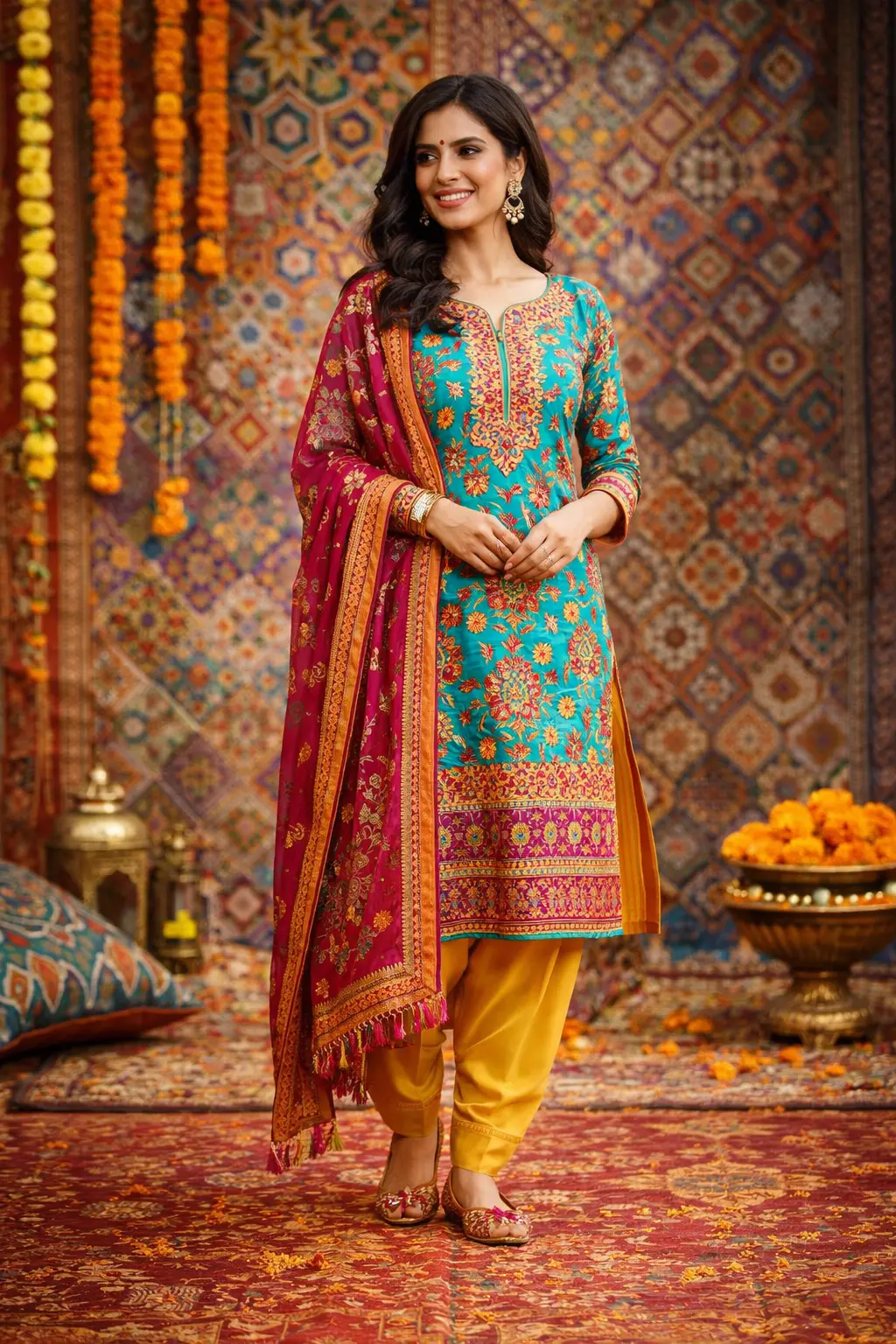
1. Juttis — The Timeless Classic
If there is one shoe that is practically made for ethnic wear, it is the jutti. These flat, pointed-toe shoes originate from Punjab and Rajasthan and come in stunning embroidered designs. They are comfortable, versatile, and incredibly stylish.
Best paired with:
- Salwar kameez and Patiala suits
- Casual kurtas with cigarette pants
- Anarkali suits for festivals
Pro Tip:
Go for embroidered juttis in gold or silver thread when matching with heavily embellished ethnic wear. Keep it simple with solid colours for casual ethnic outfits.
2. Kolhapuri Chappals — Earthy and Effortless
Kolhapuri chappals are handcrafted leather sandals from Maharashtra. They have a distinctive T-strap or multi-strap design and are known for their durability and rustic charm. These are a great choice when you want to dress down your ethnic look.
Best paired with:
- Cotton sarees and handloom sarees
- Ethnic skirts and flared kurtas
- Palazzo suits for a boho-ethnic vibe
Pro Tip:
Tan and brown Kolhapuris work great with earthy tones like mustard, olive, and rust. Black Kolhapuris pair well with darker ethnic wear.
3. Block Heels — Elegant and Stable
Block heels are a great middle ground between comfort and height. They give you the elevation you might want for lehengas or long anarkalis, without the instability of stilettos. Many block heel designs now come in beautiful ethnic prints and fabrics, making them perfect for traditional occasions.
Best paired with:
- Bridal lehengas and heavy sarees
- Floor-length Anarkali suits
- Sharara and gharara sets
Pro Tip:
Velvet block heels with mirror or zari work look stunning with traditional bridal or festive ethnic wear. They are also much easier to walk in all day compared to stilettos.
4. Mojris — The Royal Touch
Mojris are the Rajasthani-origin version of dress shoes, typically worn by men but now popular in women’s fashion too. They are slightly more structured than juttis and often feature intricate threadwork and mirror embellishments.
Best paired with:
- Bandhgala suits and sherwanis for men
- Traditional lehengas and Rajasthani-style ethnic wear for women
- Festive kurta-pyjama sets
Pro Tip:
For men, mojris are among the best choices for completing a traditional look without going overboard. Pair gold or ivory mojris with cream or off-white sherwanis.
5. Kitten Heels — Subtle and Sophisticated
Kitten heels — typically 1.5 to 2 inches tall — are perfect for those who want a slight heel without too much height. They are especially great for daytime ethnic events, such as puja ceremonies or festive brunches.
Best paired with:
- Silk sarees and chiffon sarees
- Straight-cut kurtis with palazzos
- Semi-formal ethnic wear for office or occasions
Pro Tip:
Strappy kitten heels in nude or gold work as a blank canvas with almost any ethnic outfit — they elongate the leg without drawing too much attention away from the outfit itself.
6. Wedge Heels — Comfort Meets Height
Wedge heels distribute weight more evenly than stilettos, making them far more comfortable for long events. They pair particularly well with shorter ethnic outfits where the shoe is more visible.
Best paired with:
- Knee-length kurtas with churidars
- Ethnic co-ord sets
- Fusion ethnic wear with Indo-Western tops
Pro Tip:
Woven or jute wedges give an earthy, bohemian look when paired with organic cotton or handloom ethnic wear. Platform wedges with ethnic prints are a great fusion fashion choice.
7. Stilettos — Bold and Glamorous
Yes, stilettos can work with ethnic wear — but only in the right context. They are best reserved for heavily embellished or bridal-style ethnic wear where you want maximum impact and are not going to be on your feet all day.
Best paired with:
- Bridal lehengas and heavily embellished ethnic wear
- Reception sarees in silk, georgette, or net
- Designer ethnic gowns
Pro Tip:
Keep the colour simple — nude, gold, or silver stilettos rarely go wrong. Avoid chunky embellishments on the shoe if the outfit is already heavily decorated.
8. Flats and Ballet Flats — Easy and Practical
Not every ethnic occasion calls for heels. Ballet flats and embellished flats are a smart choice for casual ethnic outfits, especially if you are going to be on your feet for a long time.
Best paired with:
- Casual daily wear kurtas and kurtis
- Cotton dupattas and linen ethnic sets
- Ethnic loungewear and festive casuals
Pro Tip:
Look for ballet flats with embroidery, sequins, or bead work — they make the outfit feel festive even without a heel.
9. Sneakers — Fusion Style Done Right
Surprised? Sneakers are actually a growing trend in the ethnic fashion world. The Indo-Western or fusion look has made it completely acceptable to pair white sneakers with ethnic wear — especially among younger generations.
Best paired with:
- Short kurtas with jeans or trousers
- Ethnic co-ord sets for casual outings
- Dhoti pants with Indo-Western tops
Pro Tip:
Keep the sneakers clean and minimal — white or off-white works best. Avoid chunky sneakers with delicate ethnic fabrics; instead, go for slim-profile styles.
10. Strappy Sandals — Versatile and Feminine
Strappy sandals — whether flat or heeled — are incredibly versatile when it comes to ethnic wear. They add a touch of elegance without being too heavy, and they work across multiple outfit types and body types.
Best paired with:
- Georgette and chiffon sarees
- Silk kurtas for semi-formal occasions
- Lehengas for mehendi or sangeet ceremonies
Pro Tip:
Strappy heeled sandals with a thin ankle strap are particularly beautiful with sarees — they keep the look clean and do not overpower the drape.
How to Match Shoe Colours With Ethnic Wear
Colour matching is just as important as shoe style when it comes to ethnic wear. Here are some easy rules to follow:
- Gold and silver are universally safe.
- These metallic shades complement almost any colour in ethnic wear — whether you are wearing deep jewel tones or pastel shades.
- Nude shades elongate the leg.
- Especially with sarees and lehengas, nude-toned shoes create a seamless line from the foot upward, making you look taller.
- Matching shoes to the dupatta or blouse works well.
- Instead of trying to match the full outfit, picking a shoe colour that matches one element (blouse, border, or dupatta) creates a coordinated, polished look.
- Contrast can be stylish.
- A pop of contrasting shoe colour can elevate a simple ethnic outfit — for example, red juttis with a pale yellow salwar suit.
Shoes by Ethnic Outfit Type — Quick Reference Guide
Still not sure where to start? Here is a quick guide based on the specific ethnic wear you are styling:
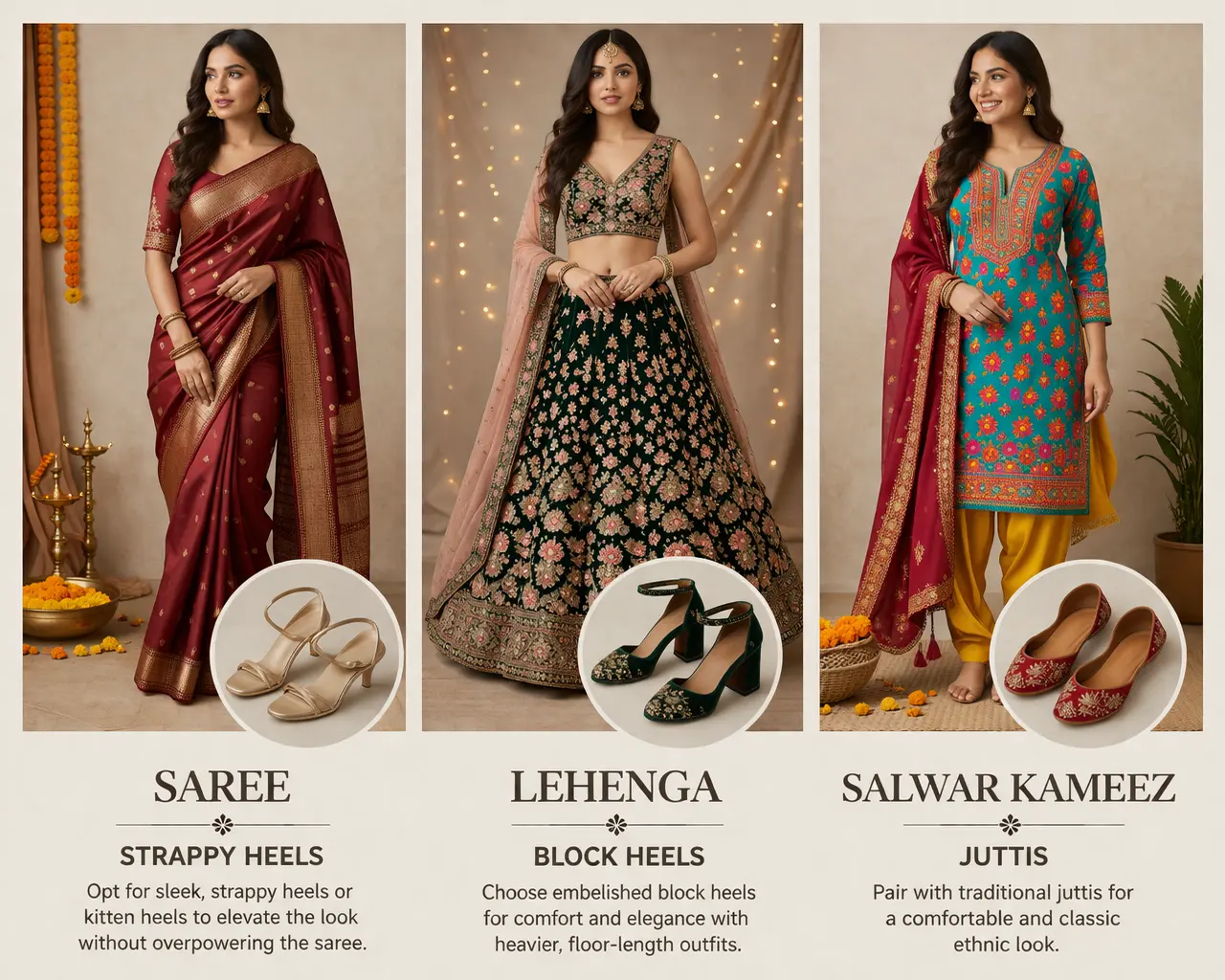
Saree
- Best picks: strappy heels, block heels, kitten heels, stilettos
- Avoid: flat chunky sandals or sneakers (unless going for an intentional fusion look)
Lehenga
- Best picks: block heels, mojris, wedge heels, strappy heels
- Avoid: very flat shoes — they can make the hemline drag or look unfinished
Salwar Kameez / Anarkali
- Best picks: juttis, kolhapuris, ballet flats, block heels
- Avoid: very high stilettos — they can make the proportions look off
Kurta with Palazzos or Trousers
- Best picks: sneakers, block heels, juttis, wedges
- This is the most flexible ethnic outfit when it comes to footwear — almost anything goes!
Sherwani / Bandhgala (Men)
- Best picks: mojris, dress shoes, oxford shoes in brown or black
- Avoid: casual sandals or sports shoes — they undercut the elegance of the outfit
Common Shoe Styling Mistakes to Avoid With Ethnic Wear
Even with the best intentions, people make these common mistakes when styling shoes with ethnic wear. Here is how to avoid them:
Mistake 1: Wearing shoes that are too casual for the occasion
Flip-flops or rubber slippers with a silk saree at a wedding is a no. Match the formality of your footwear to the event, not just the outfit style.
Mistake 2: Choosing the wrong heel height for the outfit length
If you are wearing a floor-length lehenga or saree, you need at least a small heel to keep the fabric from dragging. If unsure, wear the outfit and check the hemline before the event.
Mistake 3: Over-embellishing both the outfit and the shoes
If your ethnic outfit is already heavily embroidered or jewelled, keep the shoes simpler. The goal is balance, not competition.
Mistake 4: Ignoring comfort for aesthetics
A beautiful ethnic outfit deserves comfortable shoes. If you are going to be at a 6-hour wedding, choose heels you can actually wear for that long — or carry a pair of juttis as backup!
Mistake 5: Wearing extremely pointed stilettos with heavy fabrics
The risk of stepping on your own hem and damaging delicate fabric is real. Be extra careful if your ethnic wear has a long trail or flared bottom.
Expert Pro Tips for Styling Shoes With Ethnic Wear
- Try on your full ethnic outfit with the shoes before the day of the event. You want to check the hem length, colour balance, and your comfort level all at once.
- Break in new footwear at least a few days before wearing it to a long event. New shoes and a 4-hour mehndi ceremony do not mix well.
- Consider the venue. Grass lawns = avoid stilettos. Marble floors = be careful with slippery soles. Outdoor temples = easy slip-on styles.
- Invest in a few ethnic staples: one pair of gold juttis, one pair of nude block heels, and one pair of strappy sandals can cover almost every ethnic wear occasion.
- Use gel insoles inside heels for all-day comfort during long ethnic events.
- For men: a well-polished pair of mojris or traditional nagra shoes can instantly elevate a simple kurta-pyjama to wedding-worthy instantly.
Read More Article
How to Look Rich Without Spending Much
Office Wear Styling Guide on a Budget
Ethnic fashion trends and shoe pairings
For authentic jutti and mojri product pages
Frequently Asked Questions (FAQs)
Q1. What is the best footwear to wear with a saree?
The best shoes for a saree depend on the occasion. For weddings and formal events, go with strappy heels, block heels, or kitten heels in gold or nude tones. For casual or daytime sarees (like cotton or handloom), Kolhapuri chappals or embellished flats work beautifully. The key is to make sure the heel height lifts the hem of the saree just enough so it does not drag.
Q2. Can I wear sneakers with ethnic wear?
Yes, absolutely! Sneakers with ethnic wear is a popular fusion trend, especially for casual outings. It works best with shorter ethnic outfits like kurtas paired with jeans or trousers. Stick to white or minimalist sneakers — avoid heavily branded or neon styles if you want the look to feel cohesive.
Q3. What shoes should men wear with a sherwani?
For a sherwani, mojris and nagra shoes are the traditional go-to choice and they look fantastic. If you want a slightly more Western feel, polished oxford or derby shoes in tan, brown, or black work well with most sherwani colours. Avoid sports shoes or casual sandals — they do not match the formality of a sherwani.
Q4. What colour shoes go best with ethnic wear?
Gold, silver, and nude shades are the safest and most versatile choices with ethnic wear. They work with almost any outfit colour without clashing. If you want to be bolder, try matching your shoe colour to your dupatta, blouse, or border for a coordinated look. Jewel-toned shoes like deep red, royal blue, or emerald green can also look stunning with the right outfit.
Q5. Are juttis comfortable enough for all-day wear?
Juttis can be comfortable for a few hours, but they are not always ideal for an entire day of standing or walking — especially if they are new. The pointed toe can get tight, and the flat sole offers minimal arch support. For all-day comfort, break them in beforehand, use gel toe inserts, and consider switching to flats or block heels if you need to walk long distances.
Conclusion — Step Out in Style With the Perfect Ethnic Pairing
Styling shoes with ethnic wear does not have to be stressful. Once you understand the basics — outfit type, occasion, heel height, and colour — it all starts to click into place.
From the elegance of block heels to the charm of hand-embroidered juttis, from the comfort of Kolhapuri chappals to the modern edge of white sneakers — there is no shortage of beautiful, functional footwear options for every type of ethnic wear.
The best shoes are the ones that make you feel confident, comfortable, and completely put-together. Whether you are heading to a big fat Indian wedding, a quiet festival puja, or a weekend family lunch, the right pair of shoes ties the whole ethnic outfit together.
Have a favourite shoe style you always reach for with ethnic wear? Drop it in the comments below — we would love to hear your go-to picks! And if this guide helped you, share it with a friend who is always second-guessing their ethnic footwear choices.
📌 QUICK TIP — SAVE THIS GUIDE!
Bookmark this page before your next ethnic occasion. Whether it is a wedding, Diwali party, Eid celebration, or a family function — come back here and pick the perfect shoe pairing for your ethnic wear outfit!