
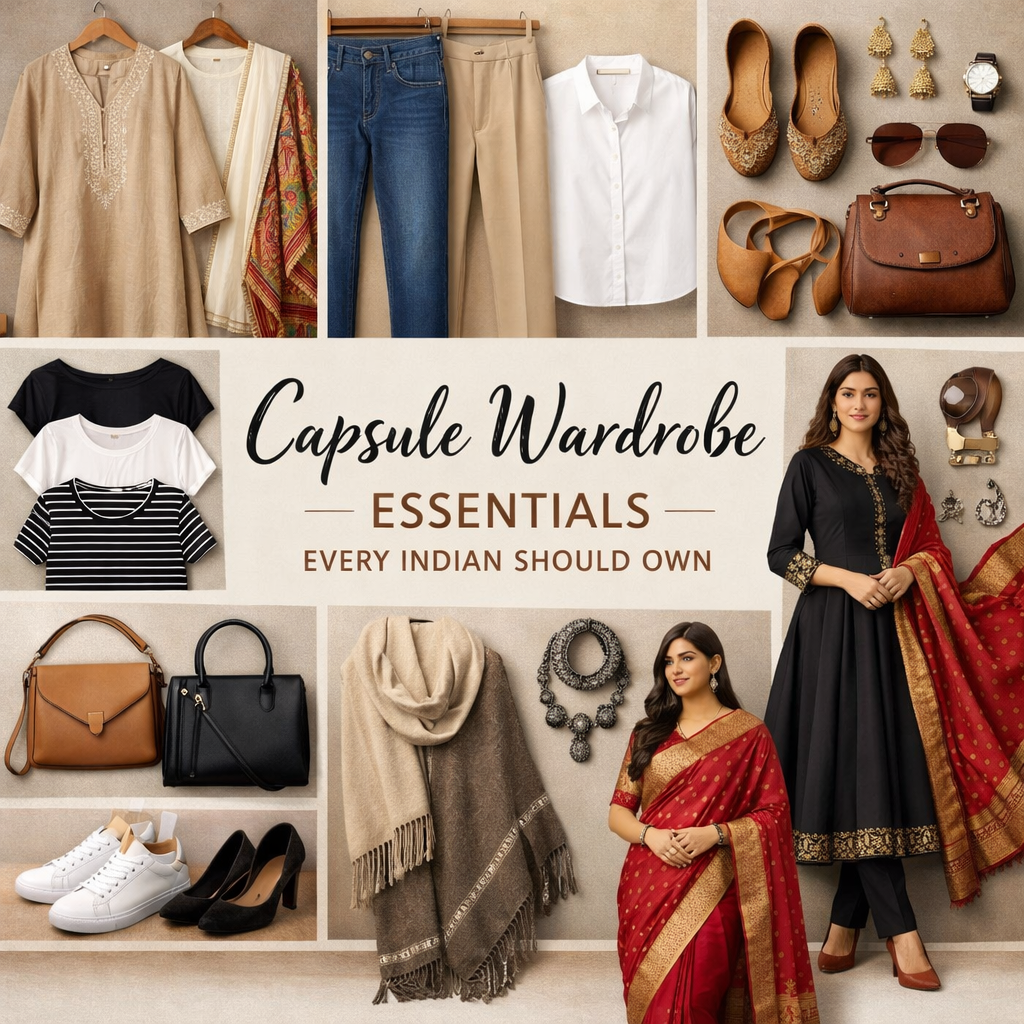
A Capsule Wardrobe Essentials Every Indian Should Own guide helps you build a stylish, minimal wardrobe using a small number of versatile clothes. The idea of a capsule wardrobe in India is to save money, reduce clutter, and still look fashionable every day. If you want smart fashion without overspending, capsule wardrobe essentials in India are the perfect solution.
Understanding the Capsule Wardrobe Concept
A capsule wardrobe is a curated collection of essential clothing items that don’t go out of style and can be mixed and matched to create numerous outfits. A capsule wardrobe India approach helps you dress stylishly with fewer clothes. You invest in high-quality staples that work together seamlessly. For Indian consumers, this means adapting the Western concept to our unique climate, cultural occasions, and diverse lifestyle needs.
The average person wears only 20% of their wardrobe 80% of the time. This startling statistic reveals how much unnecessary clothing we accumulate. By embracing a more intentional approach to dressing, you can reduce clutter, save money in the long run, and always have something appropriate to wear for any occasion.
Why Indian Wardrobes Need a Different Approach
Creating a capsule wardrobe that Indian residents will actually use requires understanding our specific needs. Unlike Western countries with four distinct seasons, most Indian cities experience tropical or subtropical climates with variations in humidity and temperature. Additionally, our cultural landscape demands versatility—we need outfits for everything from temple visits to corporate meetings, from wedding festivities to casual weekend outings.
Indian fashion also uniquely blends traditional and contemporary styles. Many professionals wear Western attire to work but prefer ethnic wear for social gatherings. This duality means our capsule collections must be more diverse than their Western counterparts while still maintaining the core principle of versatility.
The Foundation: Basic Tops and Tees
The idea behind a capsule wardrobe in India is simplicity and smart fashion. Start with five to seven well-fitted t-shirts in neutral colours like white, black, navy, grey, and beige. These form the backbone of casual outfits and can be dressed up or down depending on the occasion. Look for breathable fabrics like cotton or cotton blends that work well in Indian heat.
Add three to four formal shirts or blouses to your collection. For women, consider classic button-downs, elegant blouses with subtle detailing, and perhaps one statement piece in a jewel tone. Men should invest in crisp cotton shirts in white, light blue, and perhaps a subtle check pattern. These pieces should fit impeccably—good tailoring makes all the difference.
Don’t overlook the power of kurtas or kurtis in your capsule collection. Two to three well-designed kurtas in solid colors can be paired with multiple bottoms and serve you well for semi-formal occasions, festive gatherings, or even smart casual workplaces. Choose breathable fabrics like cotton or linen that keep you comfortable throughout the day.
Capsule Wardrobe Concept, Bottom Essentials: Pants, Jeans, and More
The right bottoms can multiply your outfit options exponentially. Begin with two pairs of well-fitted jeans—one in classic blue denim and another in black or grey. Building a capsule wardrobe in India saves both money and time, not trendy styles that will look dated in a year.
Include two pairs of formal trousers in neutral shades. Black and navy are safe choices that pair well with most tops. If your workplace allows it, consider adding a pair of chinos in beige or khaki for a smart casual option that works for both office environments and weekend outings.
For traditional wear, invest in quality bottoms that complement your kurtas. Women might choose two to three pairs of churidars, palazzos, or straight pants in versatile colours. Men should consider well-fitted pyjamas or churidars. These pieces should be comfortable enough for all-day wear and in colours that pair easily with multiple tops.
Don’t forget about ethnic skirts or salwar kameez if they suit your style. A well-crafted pleated skirt or a simple A-line can be dressed up with silk tops or kept casual with cotton kurtas, offering remarkable versatility.
The Power of Layering Pieces
India’s air-conditioned offices and varying temperatures throughout the day make layering pieces essential. A classic denim jacket works wonderfully for casual outings and can add edge to ethnic wear. Choose a medium wash that pairs well with most colours. A beginner can easily start a capsule wardrobe in India with essentials
Invest in two cardigans—one lightweight for offices and one slightly heavier for cooler evenings. Neutral colours like black, grey, or beige ensure maximum versatility. These pieces instantly make your outfit more polished and professional.
A well-fitted blazer is non-negotiable for anyone who attends meetings or formal events. Choose a classic cut in black or navy that can be dressed down with jeans or paired with formal trousers. This single piece can transform your entire look from casual to corporate in seconds.
For traditional occasions, a good shrug or jacket in silk or brocade can elevate simple kurtas and make them festive-appropriate. This is particularly useful when you need to attend weddings or celebrations but don’t want to invest in elaborate outfits for every event.
Traditional Wear Essentials
No capsule wardrobe India collection is complete without ethnic pieces that honor our rich cultural heritage. Every woman should own at least two versatile sarees—one in a classic silk for weddings and formal events, and another in cotton or georgette for regular festivities. Choose colors and designs that reflect your personal style while remaining appropriate for various occasions.
A well-crafted salwar kameez set in a timeless design offers incredible versatility. Opt for quality fabric and classic colors that won’t go out of style. This outfit works for everything from pujas to family gatherings to even some corporate environments.
Men should invest in a good kurta-pyjama set for traditional occasions. A white or cream set in quality cotton or silk serves well for most festive events. Add a Nehru jacket or waistcoat to transform the look from casual to formal instantly.
Consider adding an Anarkali or a contemporary fusion piece that blends traditional aesthetics with modern silhouettes. These pieces offer the best of both worlds and are perfect for the urban Indian who moves between different social contexts.
Dresses and One-Piece Outfits
Dresses offer unmatched convenience—they’re complete outfits in a single piece. Every wardrobe should include a classic little black dress that can be dressed up with jewellery and heels or kept casual with flats. Choose a versatile cut that flatters your body type and can work for multiple occasions.
Add two to three casual dresses in different styles—perhaps a shirt dress, a midi dress, and a maxi dress. These should be in colors and patterns that complement your existing wardrobe. Dresses are perfect for Indian summers when you want to stay cool while looking put-together.
For formal occasions, consider a cocktail dress in a jewel tone or a sophisticated neutral. This fills the gap between casual wear and heavy traditional outfits, perfect for corporate events, upscale dinners, or modern wedding functions.
Jumpsuits have also become wardrobe staples for the contemporary Indian woman. One well-fitted jumpsuit in a solid color can be styled multiple ways and works for everything from brunch to evening events.
Footwear That Goes the Distance
Shoes can make or break an outfit, so choosing the right ones is crucial. Start with a pair of comfortable white sneakers—they’re having a major moment and pair well with everything from jeans to dresses to even some ethnic wear.
Every wardrobe needs one pair of classic black pumps or formal shoes. For women, a mid-heel is more practical than stilettos for all-day wear. Men should invest in quality Oxford or Derby shoes in black leather that work for formal occasions and corporate settings.
Add comfortable flats or loafers for everyday wear. Women might choose ballet flats or casual slip-ons, while men could opt for loafers or casual leather shoes. These should be in neutral colours that pair easily with most outfits.
Don’t forget traditional footwear. Kolhapuris or juttis in classic designs add the perfect finishing touch to ethnic outfits. Choose quality over quantity—one or two well-made pairs in versatile colours will serve you better than multiple cheap options.
Sandals are essential forthe Indian weather. Invest in one good pair that’s both comfortable and stylish, suitable for everything from running errands to casual social gatherings.
Accessories That Complete Your Look
Accessories have the power to transform basic outfits into polished looks. A classic watch in silver or gold tone is both functional and fashionable. Choose a design that transitions seamlessly from day to night, casual to formal.
Every capsule wardrobe India enthusiast should own a simple gold or silver chain that works with both Western and ethnic wear. Add a pair of small studs or hoops for everyday wear, and statement earrings for special occasions.
Invest in a quality leather belt in black and brown. These simple additions can completely change the silhouette of an outfit and add polish to casual looks.
Scarves offer incredible versatility—they can dress up plain outfits, add warmth in air-conditioned spaces, or even serve as statement pieces. Choose two to three items in different colours and patterns that complement your wardrobe.
Don’t underestimate the power of a good handbag. You need at least three: a professional tote or work bag, a crossbody for casual outings, and a clutch or small evening bag for formal events. Choose quality over trendy designs, and stick to colours that work with most of your outfits.
Outerwear for Indian Weather
While heavy winter coats aren’t necessary for most Indian cities, having appropriate outerwear is still important. A lightweight trench coat works wonderfully for the monsoon season and slightly cooler months. Choose a neutral colour like beige or khaki that pairs well with everything.
For those living in northern India or hill stations, invest in one good winter jacket that provides warmth without bulk. A quilted jacket or parka in a dark colour serves this purpose well.
A denim or cotton jacket bridges the gap between different temperatures and seasons. This casual piece works for movie nights, coffee shop visits, and weekend adventures while keeping you comfortable in air-conditioned spaces.
Building Your Color Palette
The key to a functional capsule wardrobe India collection is a cohesive color palette. Start with a base of neutrals—black, white, grey, navy, and beige. These colors form 60-70% of your wardrobe and ensure everything mixes and matches easily.
Add two to three accent colors that complement your skin tone and personal style. These might be jewel tones like emerald or sapphire, earthy shades like rust or olive, or pastels like blush or mint. These colors inject personality into your wardrobe while still maintaining versatility.
Limit patterns and prints to a few statement pieces. Instead of buying multiple printed items, invest in quality basics and use accessories to add visual interest. This approach ensures your wardrobe remains cohesive and versatile.
Quality Over Quantity: Fabric Choices
In India’s climate, fabric choice is paramount. Natural fibres like cotton, linen, and silk breathe well and keep you comfortable in heat and humidity. Invest in these fabrics for pieces you’ll wear regularly, especially during the summer months.
For formal wear, wool blends work well in most Indian cities. They maintain their shape, look professional, and aren’t as hot as pure wool. However, those in tropical regions might prefer tropical wool or synthetic blends designed for warmer climates.
While synthetic fabrics sometimes get a bad reputation, modern blends can offer excellent performance. Look for moisture-wicking materials for workout wear and wrinkle-resistant fabrics for travel pieces. The key is understanding what works for your lifestyle and climate.
Always check care instructions before purchasing. Clothes that require frequent dry cleaning or special care often end up unworn. Choose pieces you can easily maintain at home to ensure your wardrobe remains functional and cost-effective.
Seasonal Adjustments
Even within a capsule wardrobe India framework, some seasonal adjustments make sense. During monsoon, you might rotate in waterproof footwear and lighter fabrics that dry quickly. Winter months might see you adding a few warmer layers while storing away the lightest summer pieces.
However, the beauty of this system is that core pieces remain constant year-round. Your basic jeans, neutral tops, and classic accessories stay in rotation regardless of season. Only the extremes of your wardrobe—the heaviest and lightest items—need seasonal swapping.
This approach keeps your closet manageable while ensuring you’re always prepared for current weather. It also helps you identify gaps in your wardrobe and make intentional purchases when needed.
Maintaining Your Capsule Wardrobe
Creating your collection is just the beginning; maintaining it requires ongoing attention. Regularly assess your pieces—if something doesn’t fit well, needs constant repair, or remains unworn for six months, it’s time to let it go.
Care for your clothes properly to extend their lifespan. Follow washing instructions, store items correctly, and address minor repairs promptly. Well-maintained quality pieces will serve you for years, justifying their initial investment.
Before adding anything new, ask yourself key questions: Does this fill a genuine gap in my wardrobe? Can I create at least three outfits with this piece and existing items? Does it align with my style and lifestyle? This intentional approach prevents impulse purchases and wardrobe bloat.
The Financial Benefits
While building a capsule wardrobe India collection might seem expensive initially, it saves money long-term. When you stop buying trendy pieces that go unworn, impulsive purchases that don’t match anything, or cheap items that fall apart quickly, your clothing budget decreases significantly.
Quality pieces cost more upfront but offer better cost-per-wear. A well-made shirt worn 100 times is cheaper than five low-quality shirts worn a handful of times each. This shift in thinking transforms how you approach fashion spending.
Additionally, knowing your wardrobe intimately prevents duplicate purchases. You’ll never again buy a white shirt because you forgot you already own three, or purchase shoes in a color that doesn’t match anything you own.
Sustainability and Conscious Fashion
Beyond personal benefits, embracing a capsule wardrobe India approach contributes to environmental sustainability. The fashion industry is one of the world’s largest polluters, and fast fashion’s rapid production and disposal cycles create enormous waste.
By choosing quality over quantity, you reduce demand for cheaply made, quickly discarded clothing. Your choices support better manufacturing practices and encourage brands to focus on durability rather than disposability.
This mindful approach to fashion also means your clothes don’t end up in landfills after a few wears. Well-made pieces can be resold, donated, or passed down, extending their life cycle and reducing environmental impact.
Making the Transition
If your current closet is overflowing, transitioning to a streamlined collection can feel overwhelming. Start by identifying pieces you wear regularly and love. These form the foundation of your new wardrobe.
Next, honestly assess items you haven’t worn in the past year. Barring special occasion pieces, if you haven’t reached for something in 12 months, you probably never will. Donate or sell these items to clear space and mental clutter.
Fill gaps strategically. Rather than shopping all at once, identify what’s missing and add pieces gradually. This allows you to make thoughtful choices and ensures each addition truly enhances your wardrobe.
Conclusion
Building a capsule wardrobe India residents will actually use requires understanding our unique climate, cultural needs, and lifestyle demands. By focusing on versatile basics, quality fabrics, and timeless styles, you can create a wardrobe that serves you well across all situations while reducing clutter and decision fatigue.
The journey toward a streamlined closet is personal and evolving. What works for one person might not suit another, and that’s perfectly fine. The goal isn’t perfection but rather creating a wardrobe that makes getting dressed each morning effortless and enjoyable.
Start small, stay intentional, and remember that building your ideal wardrobe is a process, not a destination. With time and practice, you’ll develop a keen sense of what works for you and make purchases that truly enhance your life. The result is not just a better-organized closet but a more sustainable, cost-effective, and stress-free approach to personal style that celebrates both modern sensibilities and our rich cultural heritage.
Your wardrobe should work for you, not against you. By embracing these capsule wardrobe principles adapted for Indian lifestyles, you’re investing in a system that simplifies daily decisions while ensuring you always look and feel your best. Whether you’re heading to the office, attending a wedding, or meeting friends for coffee, you’ll have the perfect outfit ready—without the overwhelm of endless choices.